MUSEVENI DIDN'T JUST PUT HIS SON IN THE ARMY — HE STUDIED HOW UGANDAN PRESIDENTS FELL! BUT WHO WILL PROTECT UGANDA FROM CORRUPTION, WEAK INSTITUTIONS AND THE ENEMIES WITHIN?
JAA HARD TALK IS WEALTH NEWS NETWORK | SPECIAL NATIONAL ANALYSIS | 7 NOVEMBER 2026
By James Alele-Acuda | Critical Thinker
WAN DUCU • WAN ACEL — Truth • Accountability • Community
FROM MILITARY COUPS TO NATIONAL SECURITY, FROM THE RISE OF GENERAL MUHOOZI KAINERUGABA TO THE WAR AGAINST CORRUPTION: PRESIDENT MUSEVENI HAS MASTERED THE ART OF SURVIVAL. NOW UGANDA MUST MASTER THE ART OF BUILDING INSTITUTIONS THAT WILL SURVIVE HIM.
THE GREAT MISUNDERSTANDING OF PRESIDENT MUSEVENI
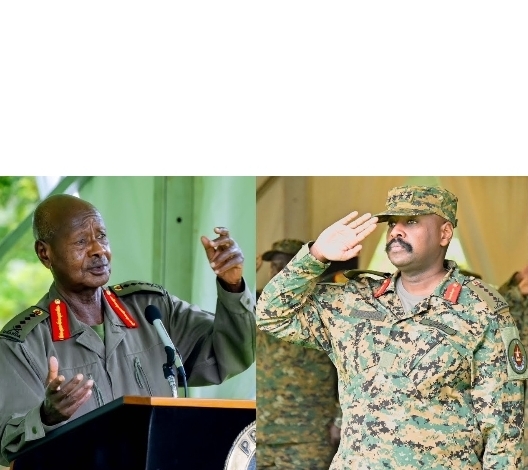
There is a popular political argument circulating about President Yoweri Kaguta Museveni and his son, General Muhoozi Kainerugaba, the Chief of Defence Forces.
It claims that Museveni placed his son at the centre of Uganda's military command because he understands that every previous government was vulnerable to betrayal from within its own security establishment.
The argument is provocative. It deserves examination.
But it also makes a fundamental mistake.
It reduces nearly four decades of military transformation, national reconstruction and strategic security management to one family relationship.
That is an incomplete reading of Uganda's history.
President Museveni did not simply study how to protect himself. He studied how governments collapse, how armies become divided, how undisciplined soldiers terrorise civilians, how political instability destroys economies, and how the absence of effective command can turn a country against itself.
Whether one admires or opposes Museveni, it is difficult to examine Uganda's post-independence political history without recognising the importance of military organisation to the survival of the state.
But there is an even greater question.
Has Uganda become strong because Museveni is strong, or has Museveni built a country whose institutions will remain strong when he is no longer President?
That is the question history will eventually answer.
THE PRESIDENT WHO LEARNED FROM THE FALL OF OTHER PRESIDENTS
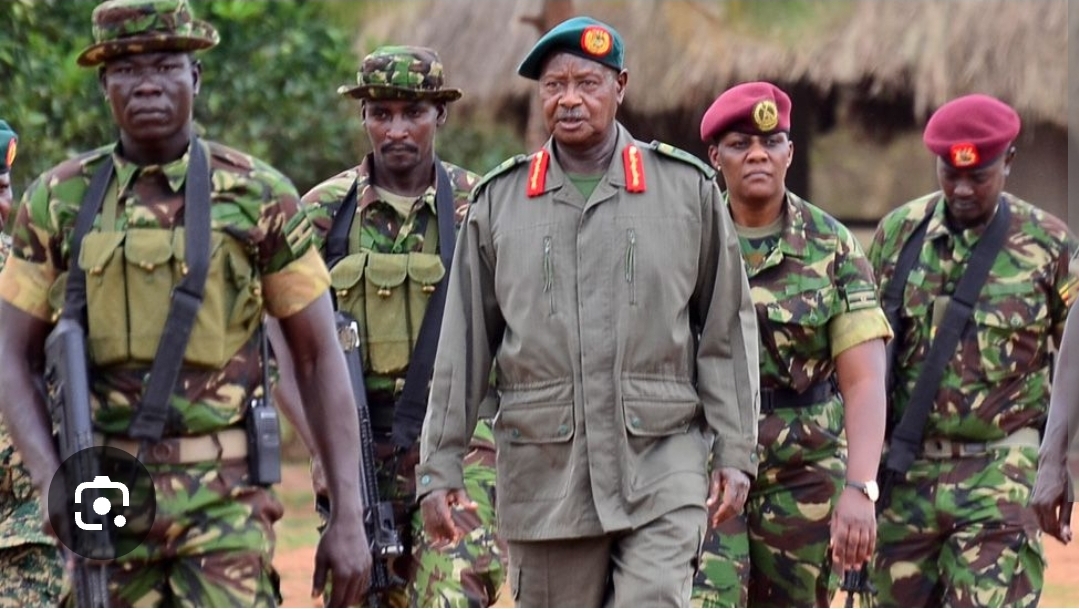
Uganda's history between independence and 1986 was marked by extraordinary political instability.
In 1966, the confrontation between Prime Minister Milton Obote and President Sir Edward Mutesa II culminated in a constitutional crisis and military assault on the Kabaka's palace.
In 1971, Idi Amin overthrew Obote.
In 1979, Amin's government collapsed following the Tanzania–Uganda war and the advance of Tanzanian and Ugandan liberation forces.
In 1980, President Godfrey Binaisa was removed from office by the Military Commission.
In 1985, Obote was overthrown for the second time, this time by military officers led by Tito Okello and Bazilio Olara-Okello.
In January 1986, Museveni's National Resistance Army defeated Tito Okello's government and captured Kampala after a prolonged guerrilla war.
These events were not all identical coups, but they shared a devastating lesson: political authority repeatedly collapsed when military power, constitutional authority and national legitimacy broke apart.
Museveni understood this history because he was an active participant in Uganda's liberation struggles.
He witnessed the consequences of fragmented command, political mistrust and military indiscipline.
One of the greatest weaknesses of earlier governments was their inability to establish durable, professional and nationally trusted security institutions.
However, it would be historically simplistic to claim that Obote merely refused to let his army fight. His governments faced serious military conflicts, internal divisions and destructive political struggles.
The deeper failure was the breakdown of confidence, discipline, legitimacy and cohesion within the state.
A president may command an army on paper, but if that army loses its unity, its discipline or its loyalty to the constitutional order, the government becomes dangerously vulnerable.
Museveni appears to have learned that lesson more thoroughly than many of his predecessors.
MUSEVENI DID NOT ONLY BUILD GENERALS — HE INVESTED IN MILITARY EDUCATION
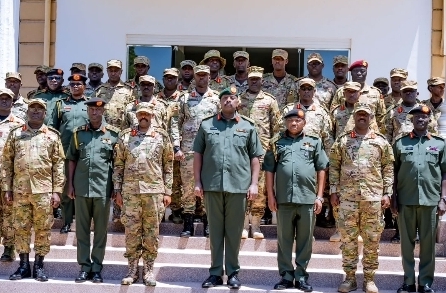
One of the most important changes under Museveni has been the transformation of the National Resistance Army into the Uganda People's Defence Forces.
The modern military is not simply an organisation of men carrying rifles.
It requires engineers, medical personnel, intelligence specialists, communication experts, logisticians, pilots, mechanics, technicians, military lawyers and highly trained commanders.
Uganda has invested in military colleges, professional development, specialised training and technical capabilities.
The UPDF today contains university graduates and professionally trained personnel working across a broad range of disciplines.
This is a significant departure from periods when political patronage, inadequate training and competing armed factions undermined national security.
It would require comprehensive workforce statistics to establish whether the UPDF has more graduates than any other government sector, or whether Uganda has Africa's best-equipped military. Such claims should not be made without comparative evidence.
Nevertheless, the importance of professional military education cannot be overstated.
A soldier who understands engineering can build infrastructure. A soldier who understands medicine can save lives. A soldier who understands constitutional law can appreciate the limits of military authority.
Training transforms an army from an instrument of force into a national institution capable of serving development, peacekeeping and public safety.
But professional qualifications must be accompanied by professional conduct.
An educated officer who abuses civilians has failed the purpose of military education.
A well-equipped soldier who intimidates citizens has misunderstood the purpose of national defence.
The ultimate test of professionalism is not the number of certificates displayed in military offices.
It is whether the ordinary Ugandan can encounter a soldier without fear.
GENERAL MUHOOZI KAINERUGABA: THE PRESIDENT'S SON OR THE COMMANDER OF A NATIONAL INSTITUTION?
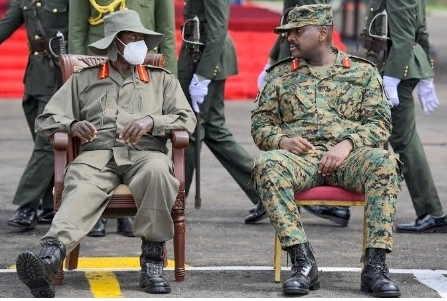
General Muhoozi Kainerugaba occupies one of the most strategically important positions in Uganda.
He is both the President's son and the Chief of Defence Forces.
This relationship naturally raises questions about succession, political influence, military independence and the concentration of power.
Critics are entitled to ask whether family connections have influenced appointments.
Supporters are equally entitled to examine Muhoozi's military training, command experience and responsibilities.
But neither criticism nor support should replace evidence.
It is not possible to establish Museveni's private motivations simply by examining his son's appointment.
What can be established is that the CDF commands a national institution whose constitutional responsibilities extend far beyond the protection of any individual leader.
The UPDF must protect Uganda's sovereignty, territorial integrity and citizens.
The military must remain capable of responding to external aggression, terrorism, regional instability and other legitimate security threats.
It must also remain subordinate to the Constitution and lawful civilian authority.
General Muhoozi's greatest opportunity is therefore not to prove that he can protect his father's presidency.
It is to demonstrate that Uganda's armed forces can protect the Republic, regardless of who occupies State House.
That would be a greater legacy than any political inheritance.
And if Muhoozi wishes to be remembered as a transformational military leader, he must continue strengthening merit, professional training, institutional accountability and respect for civilians.
A national army must never become the property of a family, a tribe, a political party or a particular region.
Its loyalty belongs to Uganda.
NATIONAL SECURITY BEGINS WITH PROTECTING YOUR OWN TERRITORY
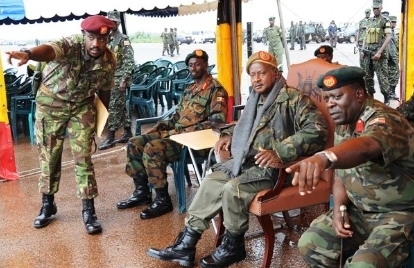
There is an old strategic principle: a leader who cannot secure his own territory cannot convincingly promise security beyond it.
National defence begins at home.
A government must protect its borders, roads, public institutions, communities, strategic installations and economic infrastructure.
Uganda has made substantial progress in restoring state authority after decades of upheaval.
The defeat and displacement of major insurgent threats, improvements in military organisation and the expansion of national infrastructure have contributed to the country's stability.
Many Ugandans remember periods when travelling after dark was associated with frightening uncertainty.
Roadblocks, armed violence, disappearances and intimidation formed part of the country's painful history.
For those who lived through those years, the importance of stability is not theoretical.
It is personal.
But security cannot be measured solely by the absence of coups.
Citizens must also be protected from unlawful arrests, torture, arbitrary detention and intimidation by security personnel.
Human rights organisations have continued to document serious concerns about abuses involving Ugandan security agencies.
Those concerns must be addressed rather than dismissed.
The most successful security system is one in which the criminal fears the law, the soldier respects the law, and the innocent citizen trusts the law.
That is the Uganda worth building.
MUSEVENI'S DEVELOPMENT RECORD MUST BE EXAMINED BEYOND THE BARRACKS
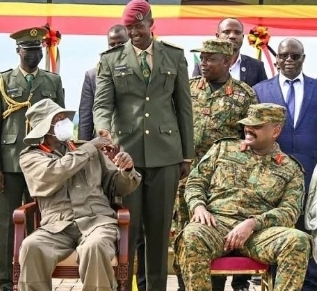
The argument that Museveni built nothing beyond military loyalty ignores major changes in Uganda's economy, infrastructure and public administration since 1986.
Road networks, electricity generation, telecommunications, education, health infrastructure and commercial activity have expanded considerably.
These developments have involved government programmes, private investment, development partners and the efforts of ordinary Ugandans.
There remain serious inequalities and unfinished projects, but visible development cannot simply be erased from the national record.
Museveni's leadership has also placed considerable emphasis on agricultural commercialisation, industrialisation and regional economic integration.
The critical question is whether these investments are delivering sufficient value to citizens.
A road that connects farmers to markets is development.
A hospital that saves lives is development.
A school that produces competent graduates is development.
But a government building that consumes public money without delivering services is not development.
Development must be measured by the improvement of people's lives, not merely by the number of projects announced at political rallies.
UGANDA'S HEALTH SERVICES: A RECORD OF STRENGTH THAT DESERVES RECOGNITION
Uganda's public health response to dangerous infectious diseases demonstrates the importance of trained personnel, surveillance systems and coordinated national leadership.
The country has developed considerable experience in responding to Ebola outbreaks.
In April 2025, Uganda declared the end of a Sudan virus disease outbreak following coordinated public health interventions.
In August 2026, the World Health Organization and Africa CDC welcomed the successful containment of another Ebola outbreak.
These achievements involved health workers, laboratory teams, surveillance officers, community leaders, government agencies and international partners.
The COVID-19 pandemic also demonstrated the importance of national coordination, although it exposed serious pressures on healthcare workers, families, businesses and medical facilities.
Such achievements deserve recognition without ignoring persistent problems.
Many public hospitals still face shortages of equipment, medicines, specialists and funding.
Health workers need reliable salaries, safe working conditions and opportunities for professional advancement.
A government that invests in disease surveillance must also invest in everyday healthcare.
A country should not wait for an epidemic before remembering the importance of its nurses, doctors and laboratory professionals.
The protection of life must remain a national priority.
MUSEVENI'S GREATEST UNFINISHED BATTLE: CORRUPTION
Here is where our analysis must become uncomfortable.
President Museveni has demonstrated remarkable political endurance, strategic patience and an understanding of security.
But corruption remains one of the most damaging weaknesses of Uganda's public administration.
The problem is not simply that corrupt individuals steal public money.
The greater tragedy is that corruption gradually becomes normalised.
A government official demands money to perform a duty already covered by a public salary.
A qualified applicant loses a job because somebody else has connections.
A contractor receives payment for work that is incomplete.
A district officer manipulates procurement.
A public servant discovers that honesty can carry personal costs while dishonesty appears to bring rewards.
And the ordinary citizen pays the price.
Uganda scored just 25 out of 100 in Transparency International's 2025 Corruption Perceptions Index, placing it 148th out of 182 countries.
That is not a statistic a country with Uganda's potential should accept.
There has sometimes been a political argument that wealth accumulated through corruption may eventually circulate through investment, construction, school fees and family support.
But that reasoning is economically and morally dangerous.
A stolen billion shillings does not become legitimate because the thief builds a commercial property.
A corrupt official does not become a national benefactor because relatives receive an education.
The original public resources may have been intended for medicines, teachers, water systems or roads.
The public loses the opportunity to decide how those resources should be used.
Corruption cannot become development merely because the proceeds are spent within Uganda.
That distinction must be made without hesitation.
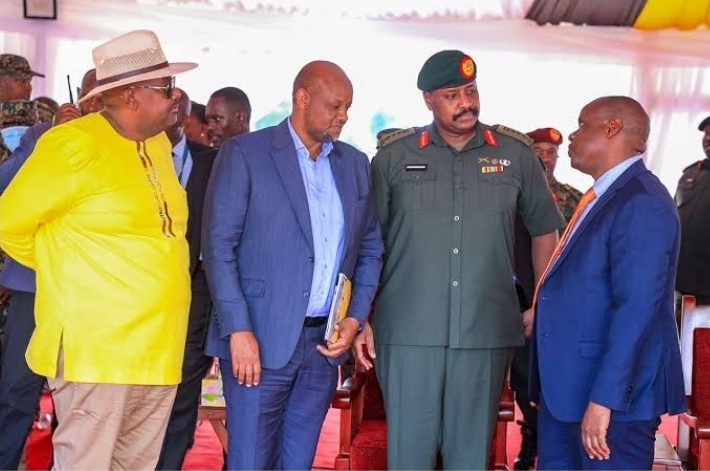
GENERAL MUHOOZI AND MINISTER BALAAM: THE FIGHT AGAINST CORRUPTION MUST BECOME INSTITUTIONAL
The growing public attention surrounding anti-corruption efforts provides an opportunity for a serious national conversation.
General Muhoozi Kainerugaba has considerable influence as Chief of Defence Forces.
Minister Balaam Barugahara Ateenyi, who now heads the Ministry of Local Government, has taken a visible role in confronting concerns about corruption and administrative failure at district level.
The interdiction of eight senior Mitooma District officials following concerns raised during the minister's visit in August 2026 illustrates the seriousness of the issues confronting local administration.
But interdiction is not a criminal conviction.
Every official must be investigated fairly and given due process.
The country needs firm action against corruption, not punishment based on public excitement or political rivalry.
Minister Balaam's energetic approach may help expose weaknesses that have been ignored for years.
However, the long-term success of anti-corruption efforts must depend on independent investigators, auditors, prosecutors and courts.
The military should support lawful national security responsibilities, but civilian corruption investigations must remain within the proper legal framework.
We also appeal for appropriate security protection for Minister Balaam, investigators, whistleblowers, prosecutors and other public officials who face credible threats while performing their duties.
Anti-corruption work can expose powerful interests.
Those carrying out lawful investigations must be protected.
Equally, public office should never provide immunity from investigation.
The fight against corruption must not depend on who is politically connected. It must depend on what the evidence proves.
A genuine national anti-corruption campaign must reach every district, every ministry and every institution where public money is entrusted to officials.
THE DANGER OF GREED: WHEN ENOUGH IS NEVER ENOUGH
Corruption is not always driven by poverty.
Sometimes it is driven by greed so deeply rooted that no amount of money can satisfy it.
A person steals enough to build a house, then steals more to build apartments.
After acquiring apartments, the same person wants hotels.
After acquiring hotels, the ambition becomes political influence.
Eventually, public office becomes an instrument for protecting accumulated wealth rather than serving the population.
The Bible warns in 1 Timothy 6:10 (NIV) that the love of money is a root of all kinds of evil.
And Proverbs 15:27 teaches that greed brings trouble to a household.
These teachings are relevant to national leadership.
Wealth is not evil.
Enterprise is not evil.
Success is not evil.
But wealth acquired through the suffering of the public becomes a national moral crisis.
A greedy official does not merely steal money. Such an official steals opportunities, dignity, public confidence and sometimes human lives.
THE NEXT NATIONAL REVOLUTION MUST BE ABOUT SYSTEMS, NOT PERSONALITIES
Uganda must now confront a fundamental challenge.
What happens when a powerful President retires?
What happens when an energetic minister leaves office?
What happens when a respected military commander is replaced?
Does the country continue functioning effectively?
Or do public institutions weaken because they depended on individual personalities?
The answer must be institutional reform.
Uganda needs recruitment systems in which qualified applicants compete fairly for public employment.
Vacancies should be advertised transparently.
Selection criteria should be published.
Recruitment panels should be accountable.
Applicants should have accessible appeal procedures.
A young Ugandan should not need a relative in a ministry, a politician's telephone number or a bribe to obtain employment.
Public jobs belong to the Republic.
They are not private inheritance.
The same principle must apply to procurement, taxation, public revenue collection and government expenditure.
Digital systems should reduce opportunities for manipulation.
Audits should identify suspicious transactions.
Public contracts should be accessible for scrutiny.
Officials who misuse funds should face timely, lawful consequences.
The greatest government is not one that survives because its President is feared. It is one that functions because its institutions are respected.
PAY CIVIL SERVANTS ON TIME — STOP CREATING CONDITIONS THAT ENCOURAGE CORRUPTION
There is another issue government must take seriously.
Public employees have families.
Teachers have children to educate.
Nurses have rent to pay.
Police officers have household responsibilities.
Civil servants have loans, transport costs, medical bills and financial obligations.
Where government salaries are delayed, the consequences can be devastating.
Even a delay of two weeks can disrupt a household living on a limited income.
A delay of two months can create serious debt and hardship.
Salary delays do not justify corruption.
But they can increase financial pressure, weaken morale and create opportunities for exploitation.
The government should establish enforceable payment schedules and transparent payroll systems.
Salary arrears must be identified early.
Payroll irregularities must be investigated.
Workers should have clear channels for resolving payment disputes.
No public institution should treat timely payment as a favour.
A government that demands discipline from its employees must demonstrate discipline in paying them.
Better compensation, reliable salaries and fair promotion systems are essential to a professional public service.
JUSTICE DELAYED IS CORRUPTION ENCOURAGED
Uganda cannot defeat corruption through speeches alone.
The justice system must become more efficient, adequately funded and independent.
Investigations should be thorough.
Prosecutions should proceed without unnecessary delay.
Courts should have sufficient personnel and resources.
Cases involving public funds should be managed through clear timelines consistent with constitutional rights and fair trial guarantees.
The innocent must be protected from wrongful prosecution.
The guilty must face lawful punishment.
Where courts establish that public money was stolen, recovery of assets should be pursued.
A corrupt official should not be allowed to enjoy the proceeds of crime simply because legal proceedings take years.
At the same time, justice must never become a political weapon.
A nation cannot claim to have defeated corruption when the powerful negotiate their way out of accountability while the poor face the full force of the law.
THE FORGOTTEN NATIONAL EMERGENCY: ROAD INDISCIPLINE AND DRINK-DRIVING
Uganda must confront another danger that destroys families without requiring a single gunshot.
Reckless driving.
Drink-driving.
Dangerous overtaking.
Speeding.
Unroadworthy vehicles.
Disregard for pedestrians.
And the abuse of official vehicles.
These are serious public safety concerns.
How many families must lose loved ones before road discipline becomes a national priority?
Government vehicles should not be exempt from traffic regulations.
A public official's driver must obey the same laws as a taxi driver.
A minister's convoy must not endanger ordinary motorists.
A police officer must not ignore dangerous driving because the offender is influential.
Uganda needs consistent enforcement of drink-driving laws, reliable breath-testing, better road engineering, driver education and transparent penalties.
Commercial drivers and public transport operators should face appropriate safety inspections.
Government institutions must establish clear rules against driving under the influence of alcohol.
A government that can protect the country against armed rebellion must also protect its citizens against preventable deaths on public roads.
National security includes the safety of a child crossing the road to school.
It includes the safety of a mother travelling to market.
It includes the safety of a family returning home from church.
These lives matter just as much as the protection of national borders.
UGANDA: THE PEARL OF AFRICA MUST BECOME MORE THAN A BEAUTIFUL NAME
Uganda possesses extraordinary natural beauty.
From the mountain gorillas of Bwindi Impenetrable National Park to the snow-capped Rwenzori Mountains, the country offers remarkable biodiversity and scenery.
From Murchison Falls to Queen Elizabeth National Park, from Lake Victoria to the River Nile, Uganda possesses tourism assets that many nations would treasure.
Its forests, lakes, wildlife, fertile landscapes and cultural heritage offer enormous economic opportunities.
But Uganda's tourism potential extends beyond wildlife.
The country is home to diverse communities, traditional kingdoms, cultural institutions, languages, music, dances, crafts, food and historical sites.
The cultural heritage of Buganda, Bunyoro, Busoga, Tooro, Lango, Acholi, Teso, Karamoja, West Nile and other communities represents a national treasure.
Lango's cultural institutions, historical heritage and community traditions can contribute to cultural tourism, education and regional economic development.
Uganda should develop tourism opportunities across all regions, not concentrate investment in a few established destinations.
Roads to tourist attractions must improve.
Hospitality training must expand.
Security and emergency medical services must be reliable.
Tourism investment should protect the environment and ensure local communities receive tangible economic benefits.
Uganda has the potential to become one of Africa's leading tourism destinations.
But potential alone does not produce prosperity.
The Pearl of Africa must be polished through security, cleanliness, infrastructure, environmental protection, professional hospitality and honest government.
A beautiful country with unreliable services will struggle to achieve its full tourism potential.
A beautiful country with transparent institutions, safe roads and welcoming communities can become an extraordinary destination.
WHAT MUSEVENI MUST LEAVE BEHIND
President Museveni has governed Uganda for more than forty years.
His political longevity is exceptional.
His understanding of Uganda's military history is considerable.
His government has overseen significant changes in security, infrastructure, public health and the economy.
But longevity must not become the only measure of leadership.
History will ask more difficult questions.
Did he leave behind institutions stronger than himself?
Did he create a public service in which employment is based on merit?
Did he ensure that corruption became genuinely dangerous for the powerful?
Did he establish a military whose loyalty to the Constitution is beyond question?
Did he strengthen the judiciary?
Did he build systems that protect ordinary Ugandans regardless of their political affiliation, tribe, religion or economic circumstances?
Did he prepare Uganda for peaceful, constitutional political transitions?
These questions are not insults.
They are the proper questions to ask of a leader whose decisions have shaped generations.
A wise leader does not merely protect the throne while occupying it. A wise leader strengthens the foundations so that the nation remains standing when the throne changes hands.
A MESSAGE TO GENERAL MUHOOZI KAINERUGABA
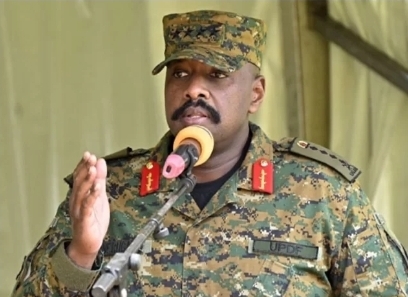
General Muhoozi has inherited an extraordinary responsibility as Chief of Defence Forces.
He commands a military institution whose history is inseparable from Uganda's national struggles.
He has the opportunity to strengthen professionalism, technical training, operational readiness and constitutional discipline.
He must ensure that promotion and opportunity are based on competence and service.
He must uphold the principle that no officer is above the law.
He must protect civilians from abuse.
And he must ensure that the armed forces remain capable of defending Uganda against genuine security threats.
The most important inheritance a father can leave his son is not political power.
It is wisdom, responsibility and an understanding that public authority carries obligations to millions of people.
General Muhoozi's greatest achievement would not be to prove that he can preserve his father's legacy through military strength. It would be to help secure a Uganda in which no future government needs to fear military overthrow.
A MESSAGE TO MINISTER BALAAM BARUGAHARA ATEENYI
Minister Balaam's visible engagement with local government accountability has raised public expectations.
Those expectations now require measurable results.
District administrations must deliver services.
Public funds must reach their intended beneficiaries.
Procurement must be transparent.
Officials must answer legitimate questions.
Citizens must be protected when reporting wrongdoing.
And investigations must be followed by lawful action.
Minister Balaam should be supported by competent investigators, auditors and legal institutions.
He should also be protected against credible threats associated with his official responsibilities.
But the fight must remain bigger than one minister.
The best anti-corruption minister is not the one who makes the most dramatic announcements. It is the one who helps establish systems that make corruption harder to commit, easier to detect and more certain to be punished.
THE BIBLICAL WARNING TO UGANDA'S LEADERS
The Bible provides a powerful lesson in Proverbs 29:2 (NIV):
"When the righteous thrive, the people rejoice."
And Proverbs 14:34 (NIV) reminds us that righteousness exalts a nation.
These principles should challenge everyone entrusted with public authority.
A government cannot build lasting greatness through military strength alone.
A nation cannot achieve prosperity when corruption undermines justice.
A country cannot become truly secure while innocent citizens fear those entrusted with protecting them.
Leadership must combine wisdom with accountability.
Power must be accompanied by restraint.
Authority must be exercised with humility.
And public resources must be managed as a sacred trust.
FINAL HARD TALK: MUSEVENI MASTERED THE ART OF KEEPING POWER — NOW UGANDA MUST MASTER THE ART OF KEEPING JUSTICE, PEACE AND PROSPERITY
The argument that Museveni appointed his son simply to prevent another general from overthrowing him is politically provocative.
But it cannot fully explain Uganda's transformation since 1986.
Museveni's military strategy has involved training, institutional development, security coordination and the consolidation of state authority.
At the same time, questions about family influence, political succession and military independence remain legitimate matters of public debate.
The ultimate challenge is to ensure that Uganda's security institutions belong to the nation rather than any individual.
Uganda has travelled a long distance from the political instability of its early post-independence decades.
But the journey is unfinished.
The country must now confront corruption with the same seriousness that it has confronted armed threats.
It must treat delayed public salaries as a governance failure.
It must treat road safety as a national responsibility.
It must strengthen judicial independence.
It must protect whistleblowers and honest officials.
It must transform natural beauty into sustainable tourism prosperity.
It must provide opportunities for young people based on talent rather than connections.
And it must build institutions capable of surviving political change.
President Museveni may have mastered the weaknesses that destroyed previous governments. His greatest remaining opportunity is to ensure that those weaknesses never destroy Uganda again.
Because a country does not become great merely because its President remains in power.
It becomes great when its institutions remain trustworthy, its citizens remain protected, its resources remain productive and its laws remain stronger than the ambitions of individuals.
The military must defend Uganda.
The police must protect Uganda.
The judiciary must deliver justice.
The civil service must serve Uganda.
The political leadership must account to Uganda.
And the people must remain the ultimate beneficiaries of national development.
LET THE NEXT GENERATION INHERIT STRONG INSTITUTIONS, NOT STRONGMEN.
LET THE NEXT GENERATION INHERIT OPPORTUNITIES, NOT CORRUPTION.
LET THE NEXT GENERATION INHERIT PEACE, NOT FEAR.
LET THE NEXT GENERATION INHERIT THE PEARL OF AFRICA IN ALL ITS BEAUTY, DIGNITY AND PROMISE.
For the greatest national legacy is not the number of years a leader remains in office.
IT IS THE STRENGTH OF THE COUNTRY THAT REMAINS AFTER HIM.
JAA HARD TALK IS WEALTH NEWS NETWORK
WAN DUCU • WAN ACEL
HARD TALK IS WEALTH — BECAUSE TRUTH, ACCOUNTABILITY AND COURAGE ARE THE FOUNDATIONS OF NATIONAL DEVELOPMENT.
END OF SPECIAL ANALYSIS